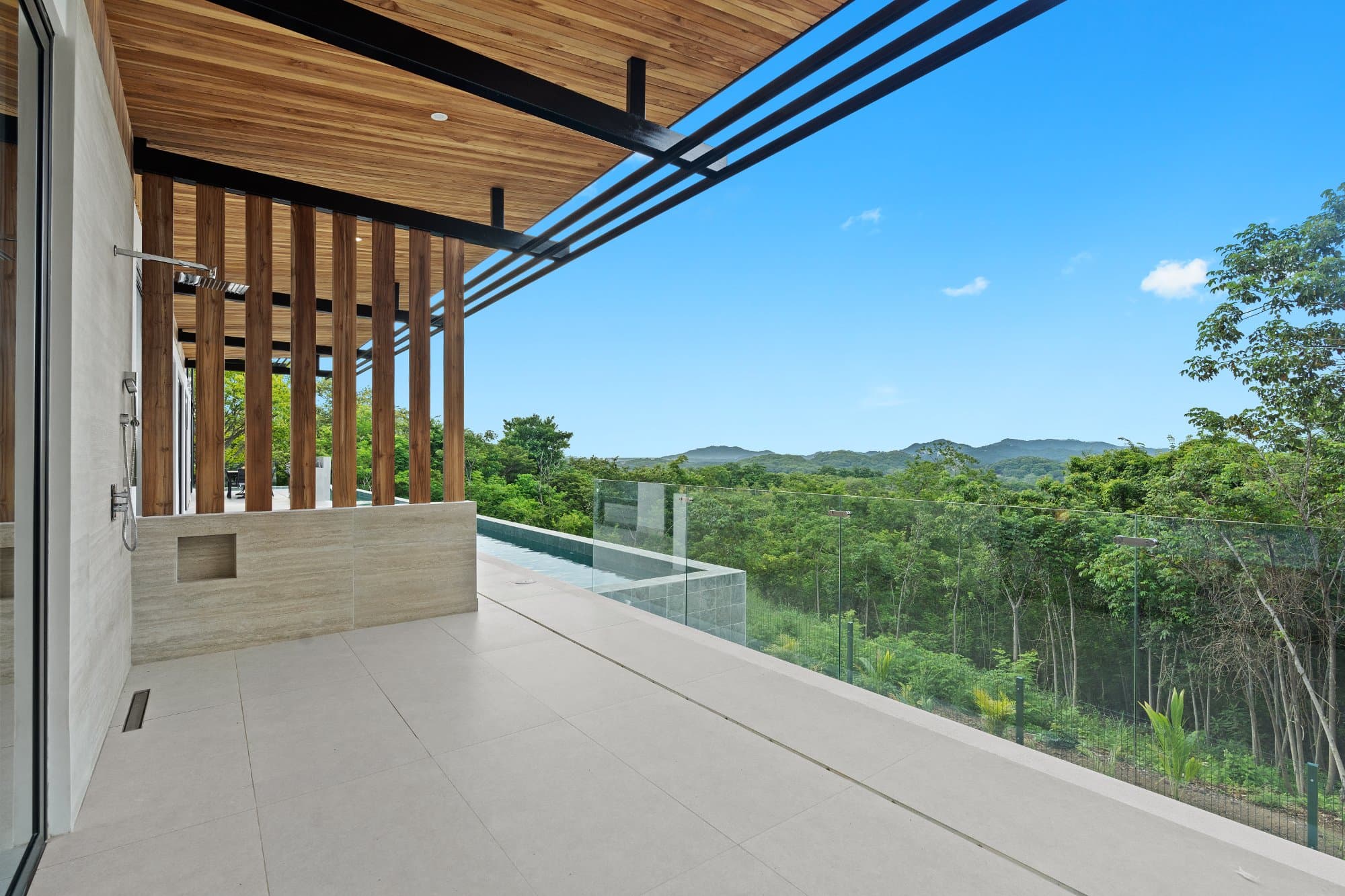
Una piscina entre las copas.
Hay proyectos que se resuelven
desde la forma. Este se resolvió
desde el árbol.
La piscina no está sobre el terreno — está suspendida entre las copas, a la altura donde el bosque tropical cierra su techo. Desde adentro, nadar es habitar el dosel. La casa entera se organiza desde esa experiencia.
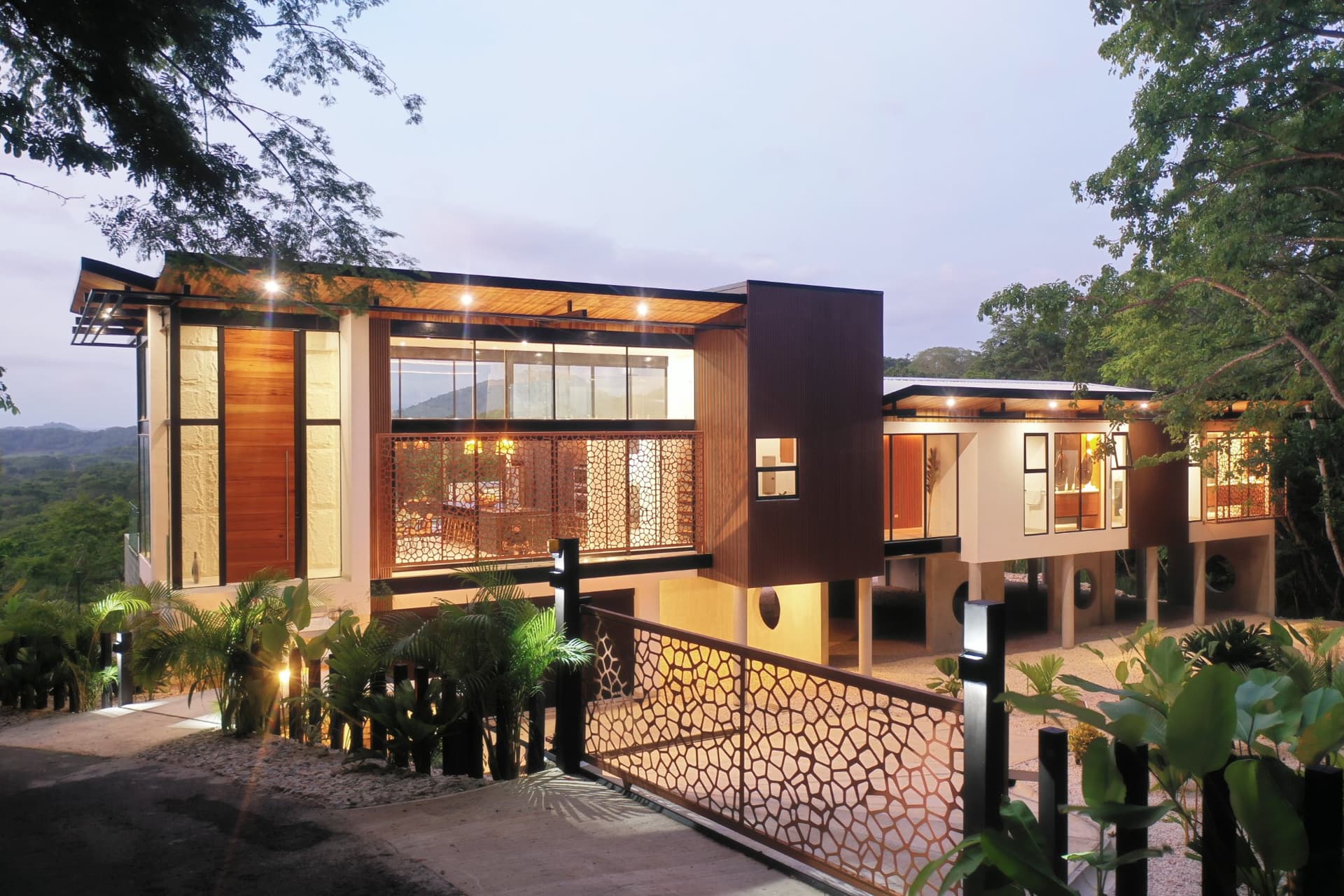
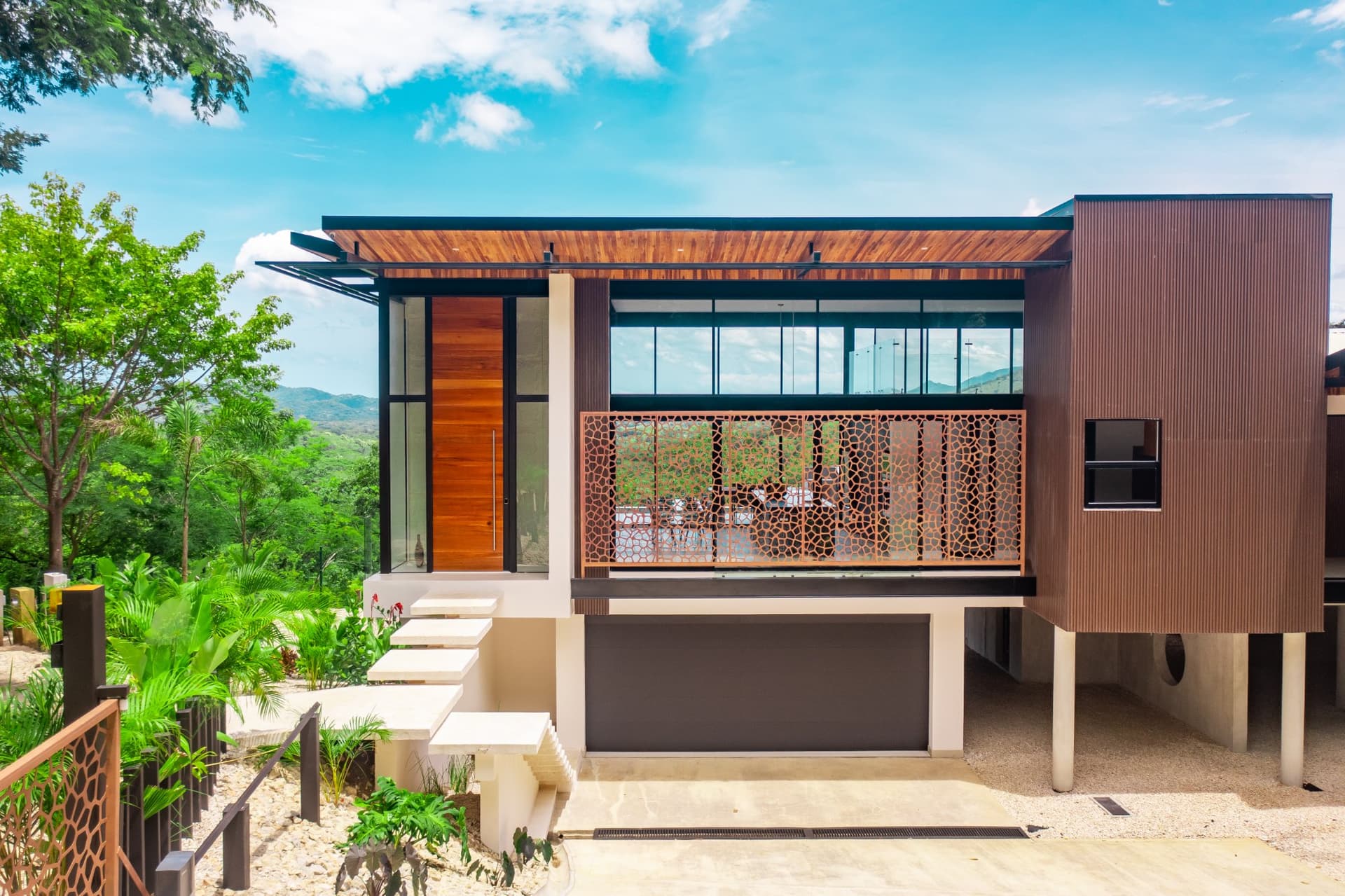
El encargo era una residencia en Tamarindo. La respuesta fue una casa elevada — no para dominar el paisaje, sino para habitarlo desde adentro. La estructura se levanta para encontrar la sombra natural de la vegetación existente. La piscina flota entre las ramas: un espejo de agua que lleva la frescura y la luz refractada al interior de cada espacio.
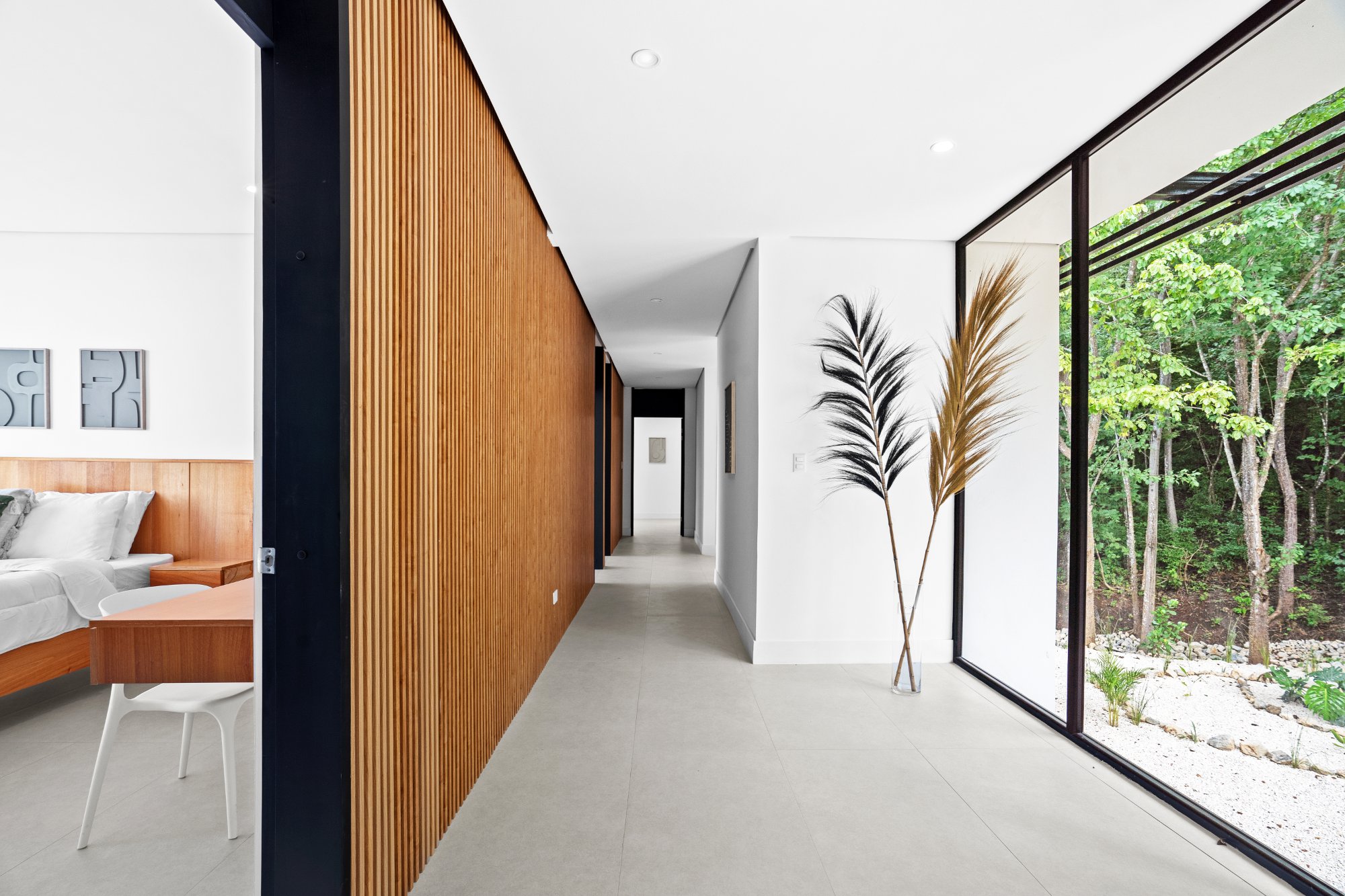
No hay límite neto entre adentro y afuera. Los espacios se abren hacia la copa de los árboles, la brisa cruza libremente de fachada a fachada, y el calor se disipa sin sistemas mecánicos. La arquitectura hace lo que el bosque ya sabía hacer.
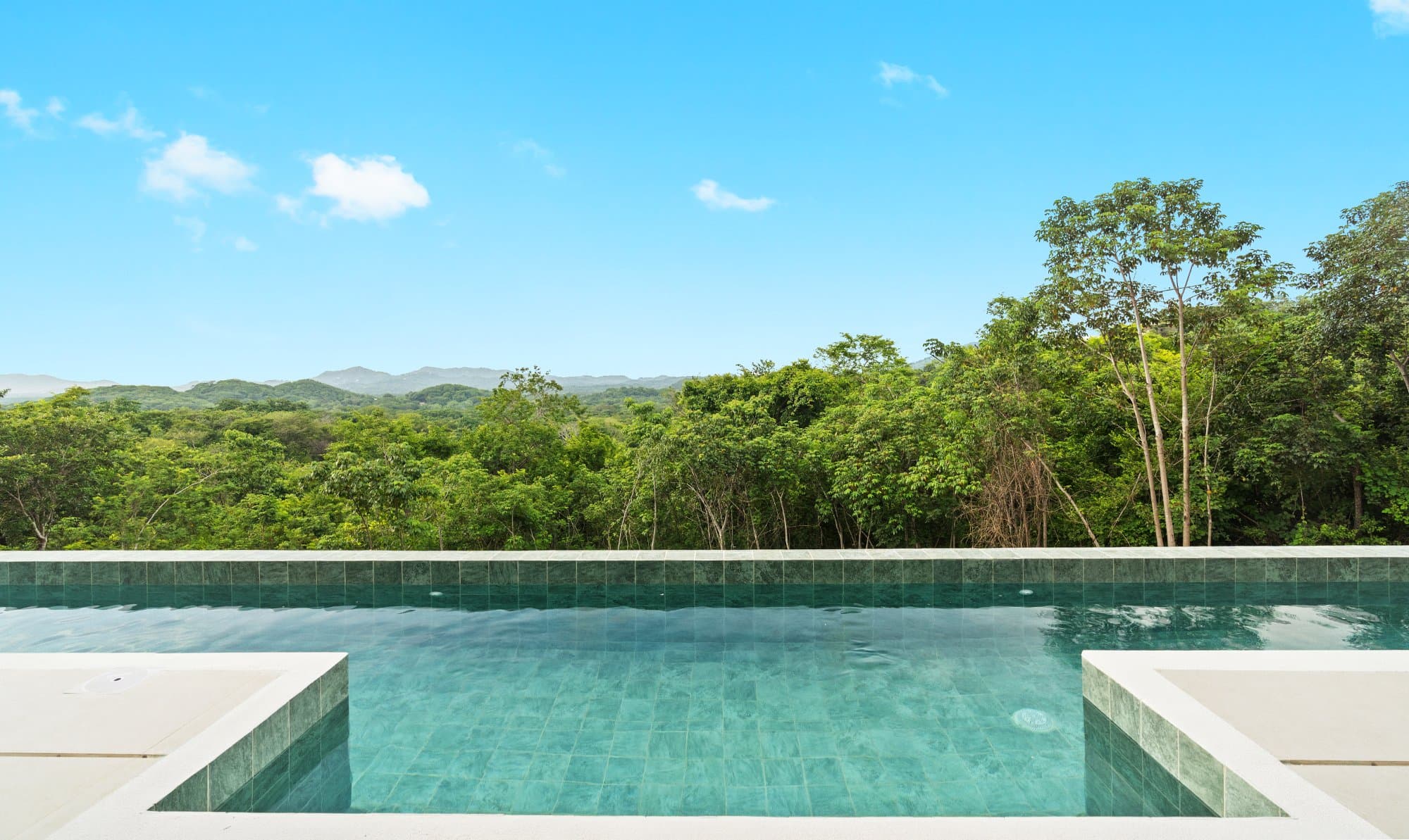
Materiales que vienen del lugar.
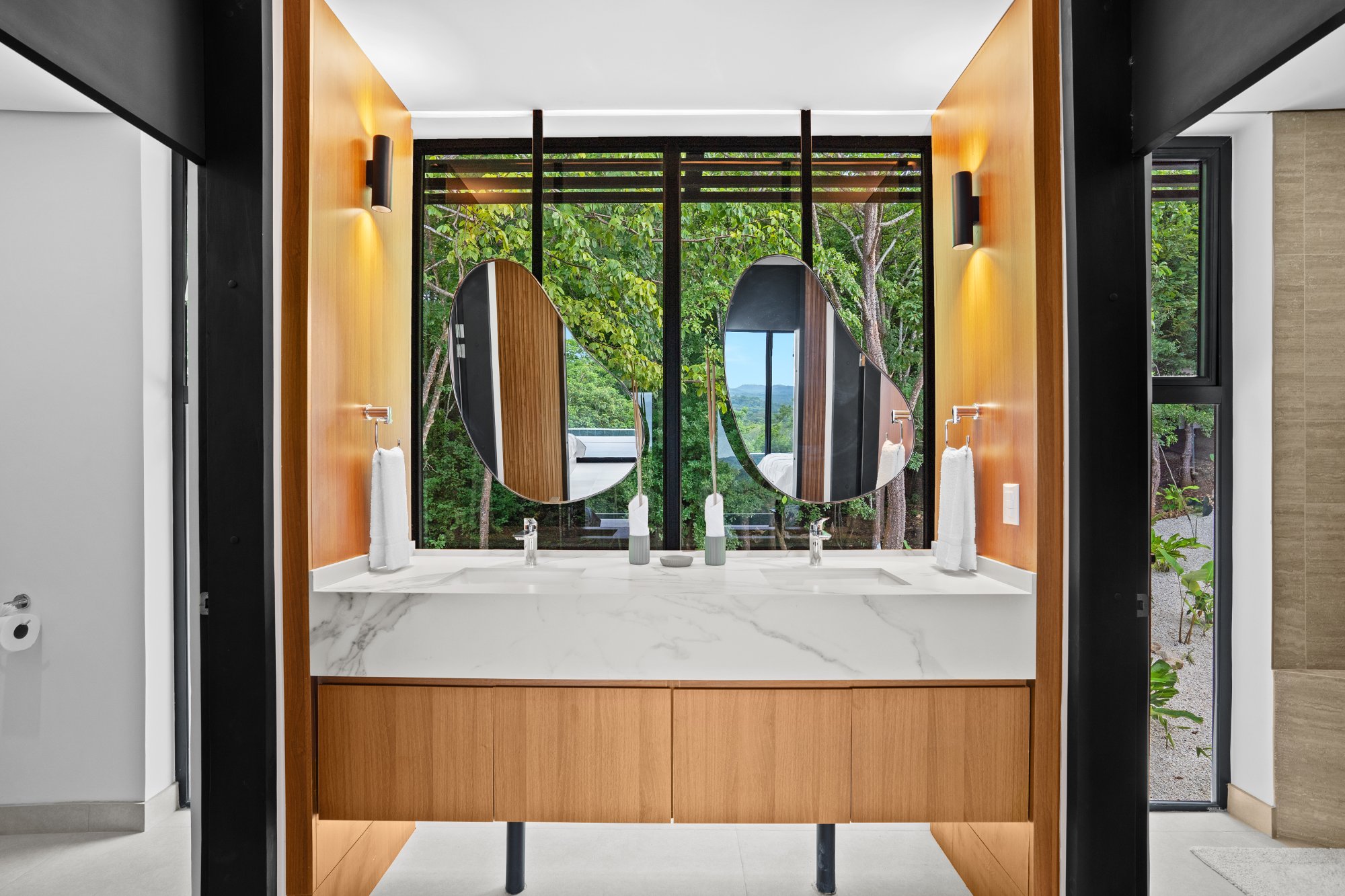
La paleta no fue elegida por estética — fue dictada por el entorno. Acero negro para la estructura, madera de teca en techos y muros, piedra y mármol en los interiores. Cada textura refuerza la misma idea: la casa es una extensión del bosque, no una imposición sobre él.
La celosía de acero corten en la fachada es el elemento que media entre interior y exterior. Su patrón orgánico filtra la luz, tamiza el viento y proyecta sombras que cambian a lo largo del día. No decora: protege y revela.
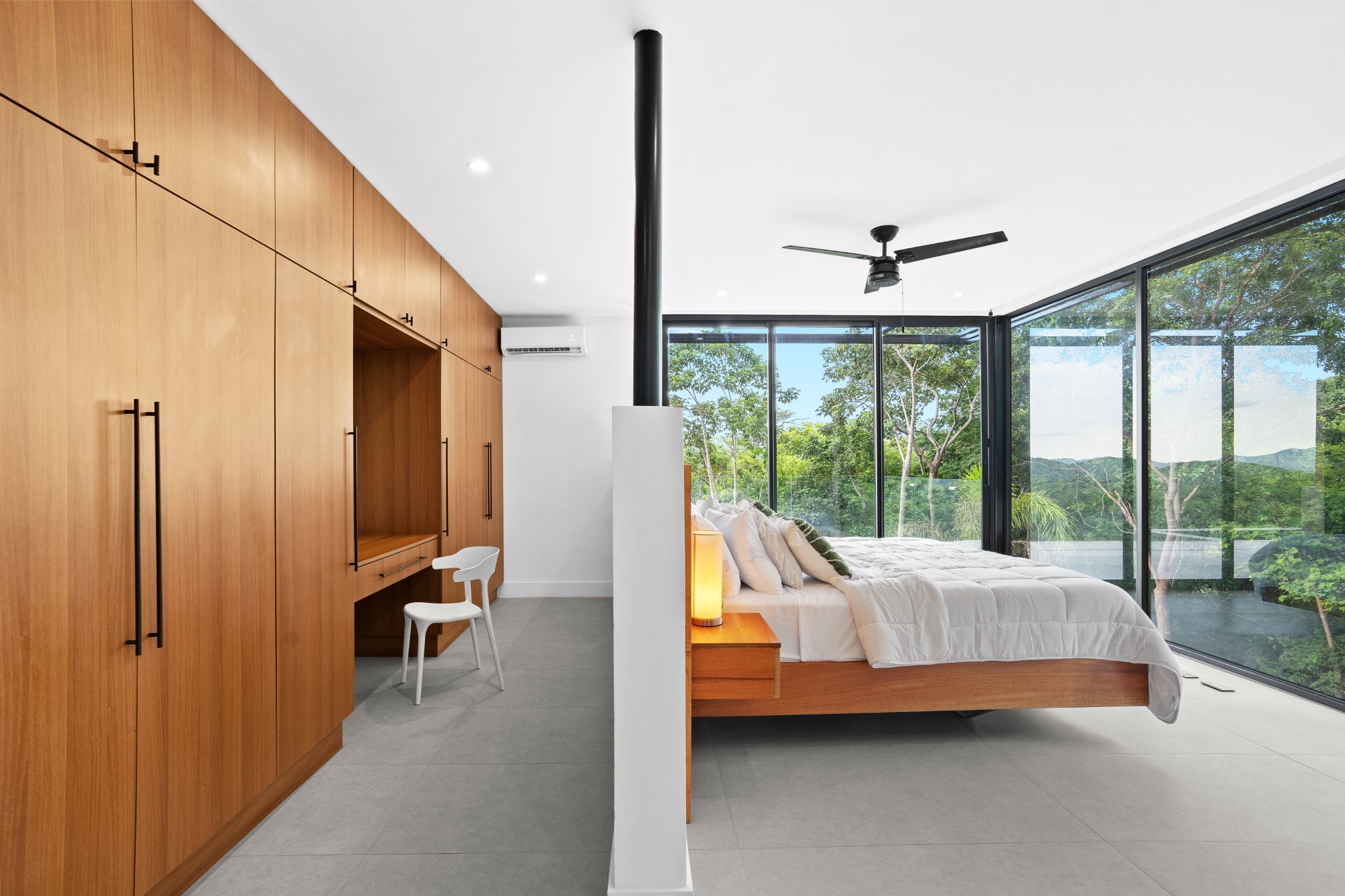
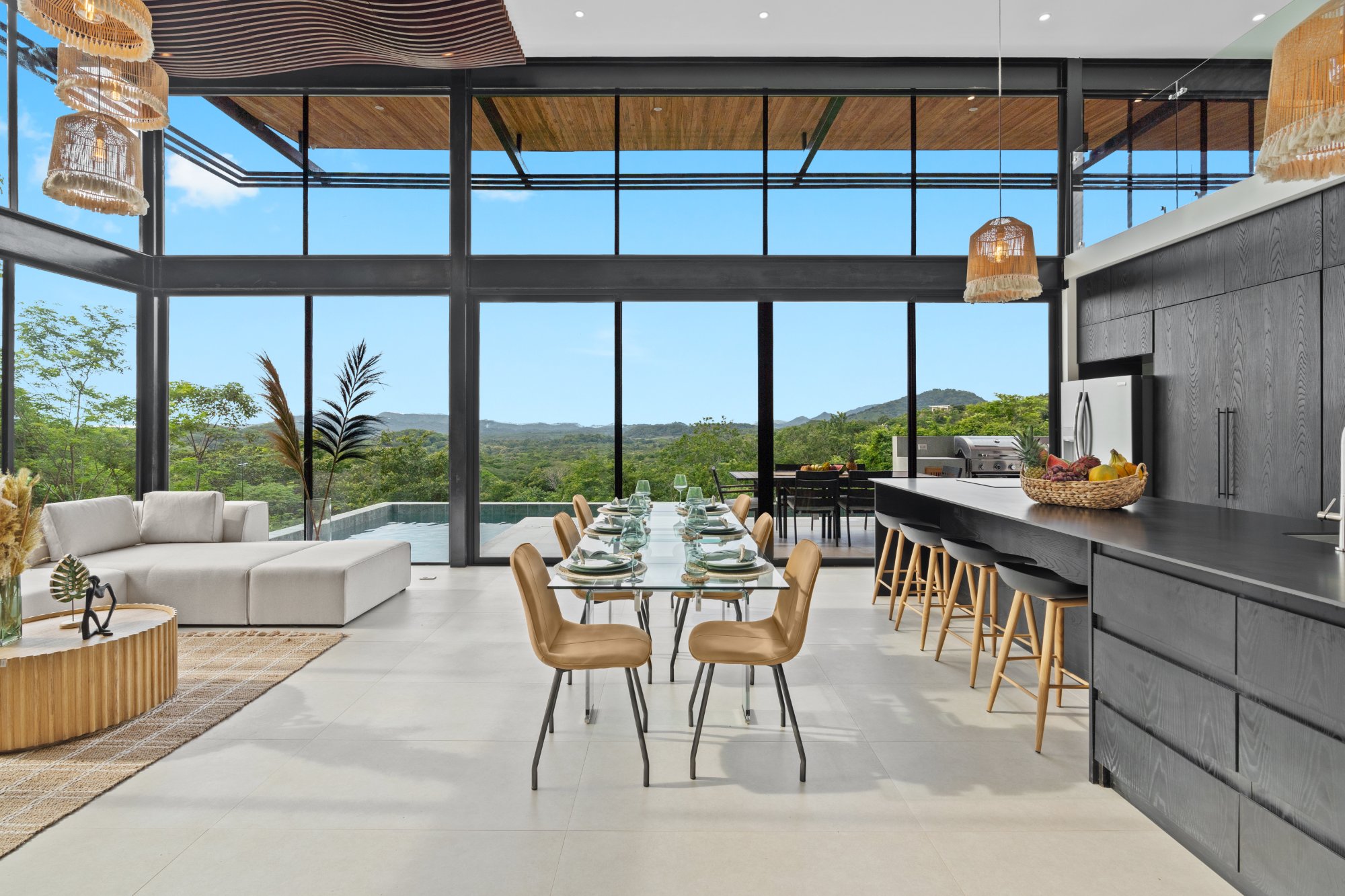
Diseñada para el trópico.
La celosía que
filtra y revela.
El patrón orgánico de la celosía de acero corten no es decoración — es arquitectura activa. Regula la luz, protege del sol directo, proyecta sombras que cambian con las horas y dialogan con el bosque. Es el umbral entre lo construido y lo vivo.